Test Cricket vs T20 Through the Eyes of the Crowd
At a Test, the stand goes quiet after two balls beat the bat. At a T20, someone behind you is already working out what the chasing side needs from the last over. BetHive looks at how both formats feel from the stands and which one you’d take a first-time cricket fan to.
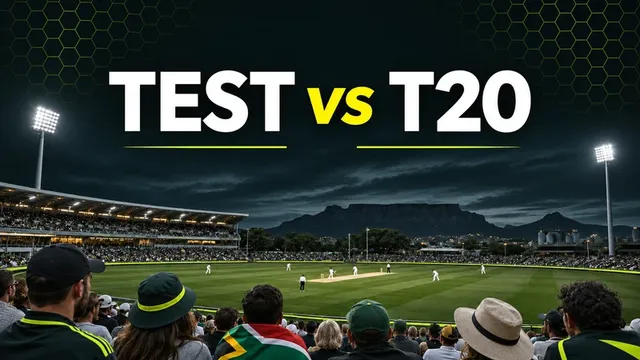
Test cricket vs T20 feels different before you’ve even found your seat. At a Test, you might hear a ripple of applause as a batter leaves a ball that misses off stump. At an SA20 night game, you might still be walking up the stairs when a six sends the whole stand to its feet. Either way, you turn towards the pitch to see what everyone else saw.
At BetHive, we wanted to look at the difference from the stands. What makes a maiden over worth watching? Why does a T20 crowd start counting balls so early? And which match would you take a first-time cricket fan to?
At a Test, the Crowd Can Hear Trouble Coming
A fast bowler beats the outside edge twice. The batter takes a moment to look down the pitch. By the time the bowler turns at the top of their run-up, the conversations around you have quietened. The scoreboard hasn’t moved, but everyone wants to see the next delivery.
That’s one of the pleasures of red-ball cricket. A standard Test is scheduled for five days, with up to two innings per side. That gives a contest between a bowler and a batter time to develop across spells and sessions. If you’re planning a day at a Proteas Test match, BetHive’s South Africa vs Bangladesh preview at SuperSport Park offers a local fixture to look back on. For the format rules, see the ICC’s overview of cricket formats.
At a T20, the Stand Does the Maths
An uninterrupted T20 gives each side one innings of up to 20 overs. Picture an SA20 crowd watching a team that needs 24 runs from 12 balls. The batter hits a six. Now it’s 18 from 11, and someone two rows back is already talking through what happens if the next ball goes for four.
That’s where Test cricket vs T20 is easy to feel as a spectator. In a tight T20 run chase, the target and balls remaining give the whole stand something to count. A dot ball can draw a cheer as loud as a boundary, especially when the bowling side is defending a small total. If rain interrupts the chase and the scoreboard suddenly shows a revised target, BetHive’s beginner cricket guide explains how rain adjustments work.
The Best Reactions Depend on What You Came to See
Two cricket fans can sit together and react to completely different things. One is watching the batter close in on a hundred. The other has spotted the captain moving a fielder finer and wants to see whether the bowler follows it up with a shorter ball. If you’ve ever caught yourself watching one player more closely than the score, BetHive’s blog on how betting can change the way you watch sport explores how a stake can shift that attention, too.
The cricket atmosphere can change within either format. A Test crowd can get loud when the home side needs one last wicket. A T20 ground can fall quiet while a high catch hangs in the air. In both cases, the people around you often tell you how much the ball matters before you’ve had time to look at the scoreboard.
The intervals tell you something about Test cricket vs T20, too. At lunch on day two of a Test, you might hear people debating whether the morning’s wickets have changed what counts as a good first-innings score. At the change of innings in a T20, the conversation has a number attached to it. Is 165 enough? By the end of the first over, half the people around you have changed their minds.
Which Match Would You Take a Friend To?
If your friend likes an evening out with a finish they’ll see on the same ticket, start with T20 cricket. Sit where they can see the scoreboard, then let them work out what the chasing team needs from the final over. If they’d rather settle in and chat between spells, take them to a morning session of a Test and pick a bowler to follow.
That’s how I’d settle Test cricket vs T20 for a first outing. South African cricket gives you room for both. And if your friend starts telling you where they’d put the fielders, you can probably start looking at tickets for the next match.